
Land Acknowledgment
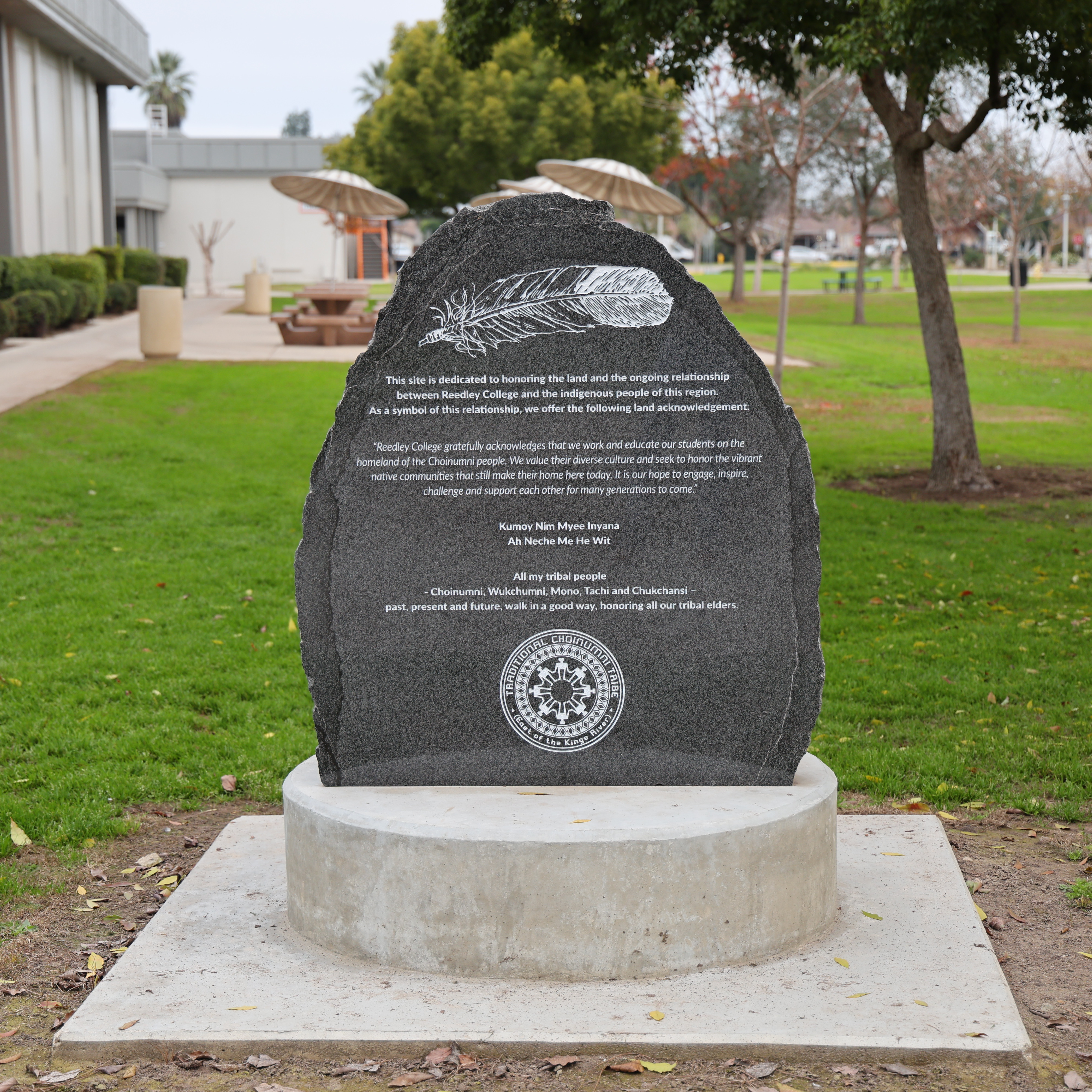
We begin today by acknowledging that we are holding our gathering on the land of the Yokuts, specifically the Choinumni ( 'Choy-num-nee'), Mono, and Wuckchumni people who have lived and continue to live here. We also acknowledge that areas surrounding Reedley are still home to many other Yokuts tribes. We recognize their spiritual connection to the waters and the land as the first stewards and the traditional caretakers of this area we now call Reedley College. As we begin, we thank them for their strength, perseverance, and resistance. We also wish to acknowledge the other Indigenous Peoples who now call Reedley College their home, for their shared struggle to maintain their cultures, languages, worldview and identities in our diverse college.
Purpose of a Land Acknowledgment
“Land acknowledgment is a traditional custom that dates back centuries in many Native nations and communities. Today, land acknowledgments are used by Native Peoples and non-Natives to recognize Indigenous Peoples who are the original stewards of the lands on which we now live. Land acknowledgment is a traditional custom that dates back centuries in many Native nations and communities. Today, land acknowledgments are used by Native Peoples and non-Natives to recognize Indigenous Peoples who are the original stewards of the lands on which we now live.”
Honoring Original Indigenous Inhabitants: Land Acknowledgment
Why do we recognize land?
“For more than five hundred years, Native communities across the Americas have demonstrated resilience and resistance in the face of violent efforts to separate them from their land, culture, and each other. They remain at the forefront of movements to protect Mother Earth and the life it sustains. Today, corporate greed and federal policy push agendas to extract wealth from the earth, degrading sacred land in blatant disregard of treaty rights. Acknowledgment is a critical public intervention, a necessary step toward honoring Native communities and enacting the much larger project of decolonization and reconciliation. Join us in adopting, calling for, and spreading this practice.”
Whose Land are You on?
Find out What Native Land You are in
How to get involved
- Join the Land Acknowledgment workgroup where members are now working to honor a physical space on Reedley’s campus with a monument celebrating Native Land. Contact Dr. Sarah Maokosy for meeting times.
- Tribal Apprenticeship
- Empower Native voices in your classroom. Check out NMAI’s Native Knowledge 360 Initiative Online.
- Add visual representations acknowledgement traditional land
- Check out our Native Plan Garden
- Take a course …